Showing posts with label Waqf. Show all posts

Monday, 13 December 2021

Our Heritage and Legacy: Hospitals and Medical Institutions

An extract from The Wonders of Waqf, which is a translation of selected chapters from Min Rawāʾiʿ Ḥaḍāratinā by Dr Muṣṭafā as-Sibāʿī
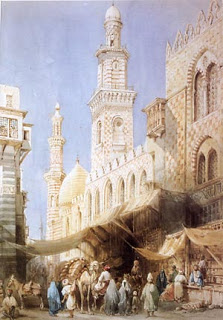
 

Qalawun Hospital, Cairo
The Bimaristan of Qalāwūn, Cairo


     One of the principles that our civilisation is based on is combining between the needs of the body and the needs of the spirit. Taking care of the body and its demands is considered necessary for realising man’s happiness and illuminating his spirit, and one of the transmitted statements that laid down this foundation of the Messenger of Allah’s civilisation, may Allah bless him and grant him peace, is his words: {Indeed your body has a right over you.}[1]  

            What is noticed from the Islamic acts of worship is the realisation of the most important objective of medicine, which is the preservation of health,[2] and thus prayer, fasting and ajj and what they entail by way of conditions, pillars and actions all preserve the health of the body along with its energy and strength. If we add Islam’s struggle against diseases and their proliferation and its desire to seek treatment that combats them, you will know what strong foundations our civilisation built in the field of medicine and the extent to which the world benefitted from our civilisation in establishing clinics and medical institutions, producing doctors whose contributions to science, and to medicine in particular, are still boasted about by humanity.

            The Arabs knew about the medical school of Gondishapur,[3] which was founded by Khosrau in the middle of the sixth century CE and some of their doctors graduated from there, such as al-Ḥārith ibn Kaladah, who lived in the time of the Prophet, may Allah bless him and grant him peace. He would advise his Companions to seek treatment from him whenever they were afflicted with illness. In the age of al-Walīd ibn ʿAbdul Malik, the first hospital in Islam was founded, and it was exclusively for lepers. Physicians were appointed and provided for and the lepers were provided for and quarantined, as well as the blind. Then the establishment of clinics followed and they were known as bīmārsitānāt, i.e. houses for the sick.

            The hospitals were of two types; stationary and mobile.[4] As for the mobile, it was first known in Islam in the time of the Prophet, may Allah bless him and grant him peace, in the Battle of the Trench, as there was a tent for the wounded. When Saʿd ibn Muʿādh was wounded in his medial arm vein, he, may Allah bless him and grant him peace, said, ‘Put him in Rufaydah’s[5] tent so I can visit him from near.’ It was the first mobile military hospital in Islam and then the caliphs and kings who came after expanded it, such that the mobile hospital came to be equipped with everything that the patients needed, including medical treatment, food, drink, clothes, physicians and pharmaceuticals. It would move from town to town in areas where there was no stationary hospital. The minister ʿĪsā ibn ʿAlī al-Jarrāḥ wrote to Sinān ibn Thābit, who was in charge of the hospitals in Baghdad and elsewhere, ‘I’ve been thinking about the people who live in the rural areas of Iraq[6] and how none of those towns are free of sick people and yet there are no physicians to treat them because there are no physicians in the rural areas. Therefore, there should be a delegation of physicians with containers of medicines and syrups and they should travel around the rural areas and stay in each locality for as long as necessary, giving treatment to the people there. Then they can move on to the next locality.’ In the days of Sultan Mamūd al-Saljūkī, one of the mobile hospitals was so big that it had to be carried by forty camels.

            As for the stationary hospitals, they were many in number and spread throughout the cities and capitals, and every small town in the Islamic world, at that time, had at least one hospital. Cordoba alone had fifty hospitals.

            The hospitals were of different kinds. There were hospitals for the army that were run by specialist physicians, in addition to the caliph’s physicians and those of the commanders and leaders. There were hospitals for prisoners and every day physicians would go around and treat the sick with the necessary medicines. One of the things the minister ʿĪsā ibn ʿAlī al-Jarrāḥ wrote to Sinān ibn Thābit, the head of the physicians in Baghdad, was, ‘I have been thinking about those who are in prison. Due to their great number and the aridness of where they are, it is inevitable that diseases will afflict them. Therefore, they should have their own physicians who visit them every day and provide them with medicines and syrups, and they should go around the prisons and treat those who are sick.’

            There were emergency stations that were close to the grand masjids and public places where the masses would congregate. Al-Maqrīzī tells us that when Ibn Ṭūlūn built his famous grand masjid in Cairo there was a place for ablution[7] and a pharmacy at the back that contained all the medicines and syrups. There were also servants and a physician who would sit every Friday and treat any worshippers who were afflicted with illnesses.

            There were general hospitals, which opened their doors to treat the masses. They were divided into two separate departments; one for males and one for females. Each department had numerous halls and each hall was for a specific illness. There were those for internal illnesses, illnesses of the eye, wounds, broken bones and orthopaedics, as well as mental illnesses. The department for internal illnesses was also divided into rooms, and thus there were rooms for fevers, rooms for diarrhoea, and so forth. Each department was run by a chief physician, and thus there was a chief physician for internal illnesses, a chief physician for wounds and orthopaedics, a chief physician for illnesses of the eye, and so forth, and all the departments had a general chief physician called a sāʿūr, and it was the name given to the head of the physicians in a hospital. The physicians worked in shifts and each physician had a specific time during which he would remain in the hall that he treated patients in. In each hospital there were a number of servants, assistants and nurses, both men and women, and they had ample, fixed salaries. In each hospital, there was a pharmacy that was known as a khizānat al-sharāb and it had various kinds of syrups and precious creams as well as excellent preserves, different medicines and superior perfumes that could not be found anywhere else. There were surgical instruments, glass vessels, bowls and other items the like of which would only be found in the storehouses of kings.

            The hospitals were also medical institutions, for in each hospital there was a large lecture hall in which the senior most physicians would sit with other physicians and the students, and next to them were instruments and books. The students would sit in front of their teacher after examining the patients and finishing their treatment. Then there would be talks and discussions about medicine between the professor and his students and they would read from medical textbooks. Oftentimes, the professor would have the students accompany him inside the hospital for practical lessons, in which he would treat patients with them being present, as happens today in hospitals that are attached to medical colleges. Ibn Abī Uṣaybah, who studied medicine in the Nūr al-Dīn Bimaristan in Damascus, said, ‘After al-akīm[8] Muhadhdhib al-Dīn and al-akīm ʿImrān had finished treating the patients who were staying in the Bimaristan, and I was with them, I sat with Sheikh Raḍī al-Dīn al-Rabī and watched how he obtained information about illnesses, made the overall diagnoses of the patients and wrote out prescriptions, and with him I researched into many illnesses and treatments.’    

            A physician would not be allowed to treat by himself until he had completed an exam in front of the senior most physician of the state. He would present a thesis to him in the specialty that he wanted to get a license in, and it would be something that he had written himself or something that a major scholar of medicine had written and to which he had added his own studies and commentaries. He would thus be examined on that and asked about everything that was connected to that discipline. If he answered the questions properly, the senior most physician would grant him a license that allowed him to practice the medical profession. It came to pass in the year 319 AH (931 CE), in the days of the caliph al-Muqtadir, that one of the physicians made a mistake in treating a man and he died. The caliph thus ordered that all the doctors in Baghdad be re-examined, and they were examined by Sinān ibn Thābit, the senior most of the physicians in Baghdad. Their number in Baghdad alone reached over eight hundred and sixty, and this does not include the famous physicians who were not re-examined and the physicians who worked for the caliph, the ministers and the rulers.

            We must not fail to mention that each hospital had a library attached to it that was filled with books on medicine and other subjects that physicians and their students need, so much so that it was said that in the hospital of Ibn Ṭūlūn in Cairo there was a library consisting of more than 100,000 volumes in all the sciences.

            As for the process of being admitted into the hospitals, they were free of charge for everyone. There was no difference between the rich and the poor, the near and the far, the noble and the unknown. First of all, the patients were examined in the outer hall. Those who only had a mild illness were prescribed treatment and then they went to the hospital’s pharmacy. Those whose illness required that they be admitted to the hospital had their name registered and then they entered the bath house. Their clothes were removed and they were put in a special waiting room. Then they were given hospital clothes and entered into the hall that was specifically for people suffering from the same illness. Each patient was given his own furnished bed with good furnishings. Then he was given the medicine that the physician has designated for him and the right foods for his health[9] in the necessary portions. The patient’s food consisted of meat from sheep, cows, birds and chicken, and the sign of being cured was the patient’s ability to eat a whole loaf of bread and a whole chicken in one meal. If the patient had entered the recovery phase he was transferred to the hall for convalescents. When he had completely recovered, he was given a new suit of clothes and a sum of money to compensate for the time that he had been unable to work. The hospital’s rooms were clean with water flowing through them and its halls were furnished with the best furnishings. Each hospital had inspectors who checked for cleanliness and observers who looked over financial records, and oftentimes the caliph or ruler would visit the patients himself and make sure they were being treated well.

            This is the system that was prevalent in all the hospitals that were established in the Islamic world, in the west as in the east…in the hospitals of Baghdad, Damascus, Cairo, Jerusalem, Makkah, Madīnah, the Maghreb, Andalusia…and we shall confine ourselves to discussing four hospitals in four capital cities of Islam in those times...


[1] Related by al-Bukhārī and Muslim.

[2] ʿAlī ibn ʿAbbās defined medicine as a science that looks to preserve health for the healthy and restore it to those who are sick.

[3] (tn): in modern-day Iran.

[4] (tn): known as field hospitals nowadays.

[5] (tn): i.e. Rufaydah al-Aslamiyyah, who is recognised as the first female nurse in Islam.

[6] Ar. as-sawād.

[7] Ar. mīāʾ.

[8] (tn): this word also means ‘physician’ and is used as a title in this context.

[9] (tn): This is an aspect that appears to be completely ignored in Western conventional medicine. For example, a patient suffering from pneumonia will be served ice-cold water, which could prove deadly, while the necessary warming foods, such as turmeric or cayenne pepper, will never be offered. It is also normal to see patients in Western hospitals eating various kinds of junk food, especially those that are high in sugar, high fructose corn syrup, aspartame and MSG. The connection between health and diet, or treatment and diet, is never considered.


Saturday, 16 November 2019

A Summary of the Rulings of Waqf (Part 4)

The fourth and final part of the Introduction to The Book of Waqf, to be republished soon, insha'Allah, which is a translation of p.490 to 491 of Sharḥ al-Yāqūt an-Nafīs


The Disconnected[1] Endowment

The jurists have mentioned that sometimes an endowment is disconnected at the beginning and sometimes it is disconnected in the middle. If it is disconnected at the beginning, such as someone saying, ‘I have dedicated this house to a man – and he doesn’t specify who – and then to Zayd’, the endowment is not valid, because there is no recipient at the beginning and one of the conditions of an endowment is implementation, and it is an endowment dedicated to someone unknown.

As for being disconnected in the middle, such as someone saying, ‘I have dedicated this house to Zayd and then a man – who is unspecified – and then to the poor, it is permissible, and when it is the turn of the unknown recipient they have said that it is spent on those nearest in kin to the endower, while another position is that it is spent on the poor.

If someone says, ‘I have dedicated this house to Zayd, ʿAmr and Bakr and then the masjid’, it is spent on the three.[2] If one of them dies, there is a difference of opinion regarding his share. Some of them have said that it is divided between the remaining two, and it is the relied-upon position, as long as the word ‘masjid’ is preceded by the conjunction ‘then’.[3] Another position is that the deceased’s share is transferred to the masjid.

An endowment is never sold, even if it is in a state of disrepair, as it is only permissible to rent it, except in a situation of compulsion, such as the state deciding to open a street and deciding to demolish the endowment because it is located in the area where the project is to be built. If the local authority pays compensation for the endowment then it is obligatory to take the compensation, and then one buys or builds something in place of it. Only the Ḥanbalīs allow for it to be replaced.[4]

The Ruling for Dedicating an Endowment to Oneself

It is not valid to dedicate an endowment to oneself, but they have said that if someone wants to dedicate something to himself then let him mention an attribute that is specific to him and no one else, such as him saying, ‘I have dedicated my house to the eldest of the family of so-and-so’ and he is the eldest of them; the endowment would be valid. This method is used by some people to prevent themselves from selling, but Imam Abū Ḥanīfah says that it is permissible to dedicate an endowment to oneself. While it is the opposite of the most correct position in the school of ash-Shāfiʿī, his proof is strong. He says, ‘If someone deserves something then it is an endowment, and if he doesn’t deserve it then it’s a case of ownership.’

And there are exceptions to the most correct position regarding the validity of dedicating an endowment to oneself, and they include bringing the idea before the ruler and the ruler regarding it as valid. Al-Khaṭīb stated this in al-Mughnī and it is acted upon today, because his ruling has not been nullified.

In the Ḥanbalī School it is valid to dedicate an endowment to oneself, and one must follow the proper procedures in the courts and registers. Abū Ḥanīfah allows for an endowment to be temporary, and then it becomes inheritance, and this is beautiful for whoever wants to do so.

The Shāfiʿīs have said that it is not allowed to replace anything from the furnishings or doors as long as they are fit for use, unless it is possible for them to be used in the same endowment, such as making them pieces of wood that can be used to cover the roof, in which case it would be permissible to change them.

In al-Minhāj:[5] ‘The most correct position is that it is permissible to sell the mats of the masjid if they have deteriorated and its columns if they are broken and only fit for burning.’

What’s strange is the words ‘if they have deteriorated’, because if they’ve reached that state, who will buy them?

Likewise, regarding replacing the old doors on an endowment for new ones, the jurists have said that is not allowed, because removing and pulling out the doors of masjids and putting other doors in their place while the original ones are still fit for use will deny the endower his reward for them, and this constrains the renewal and renovation of endowments.

If we wanted to install other doors that were harder, stronger, more solid and more beautiful, then why the prohibition? Even if we wanted to transfer the old doors to another endowment, such as from one masjid to another, they would say that it is not allowed, because they have been dedicated to this masjid.

However, Al-Sayyid ʿAlawī ibn ʿAbdullah Al-Saqqāf, when he rebuilt the masjid of Imam Ṭaha ibn ʿUmar Al-Saqqāf in Seiyun,[6] he transferred some of the old doors to other masjids, such as the masjid of Al-ʿAidrūs. He, i.e. Al-Sayyid ʿAlawī, is a great jurist, so he must have found a proof for that to be allowed.

If the doors are sold – according to the position of Imam Abū Ḥanīfah, we are subjected to another problem, because he says that the value is spent on the endower’s inheritors. The priority would be to spend it for the benefit of the masjid, if they consent to it. This is if they are limited in number. If they are not limited in number and it is not possible to include all of them, then it becomes clear that the money is spent in the same way that lost money is spent.[7]

An Illustration of an Endowment[8]

An illustration of an endowment would be for Zayd to say, ‘I have dedicated this house to the poor.’

_____________________
[1] Ar. munqaṭiʿ
[2] (tn): i.e. and not the masjid
[3] Ar. thumma
[4] (tn): i.e. even when there is no compulsion
[5] (tn): i.e. by Imam Yaḥyā An-Nawawī
[6] (tn): a city in Ḥadramawt
[7] (tn): i.e. it is spent towards the interests of the Muslims
[8] One writes in the form of the endowment, ‘All praise be to Allah. To proceed: Zayd has dedicated and retained his well-known house for the benefit of the poor, and it is a valid, everlasting endowment that it not be sold, given as collateral, taken ownership of [because now it belongs to Allah], transferred or replaced. It is a valid endowment in the Revealed Law and it fulfills all the legally considered conditions. He has begun by looking at himself [i.e. to be responsible for it] and then the most mature of his children and then their children, and this is how things shall remain forevermore as long as he has progeny.’ Then one writes the date.

Saturday, 26 October 2019

A Summary of the Rulings of Waqf (Part 3)

Part 3 of the Introduction to The Book of Waqf, to be republished soon, insha'Allah, which is a translation of p.488 to 490 of  Sharḥ al-Yāqūt an-Nafīs


The Conditions of the Form of the Endowment

The conditions of the form of the endowment are five: an expression that imparts what is meant,[1] permanence,[2] implementation,[3] an obvious recipient[4] and adherence[5]

The Conditions of the Form of the Endowment

The conditions of the form of the endowment are five:

The first is an expression that imparts what is meant, such as you saying, ‘I have given this as permanent, retained charity’, or ‘charity that shall not be sold or given as collateral’, or ‘I have dedicated this to charitable purposes for perpetuity.’[6] As for one saying, ‘I have dedicated this’, and then he goes quiet, this is not valid. However, if one were to say, ‘I have dedicated this for Allah’, this form is differed over and the clearest position[7] is that the endowment would not be valid, and this is the position of ar-Ramlī and Ibn Ḥajar.

The explanation of al-Bājūrī states, ‘It is known from what has been determined that the recipient must be obvious, for if it is not made obvious, such as someone saying, ‘I have dedicated this muṣḥaf’, or ‘this book’, ‘for Allah the Exalted, as is found to be written in several muṣḥafs and books, it is not valid, because the beneficiary of the endowment is a pillar. If it is missing, the endowment is invalid.’ And al-Bājūrī is a verifying scholar.[8] The counterpart to the clearest position is that the endowment is valid.

Ash-Sheikh Bā Makhramah differed with ar-Ramlī and Ibn Ḥajar and issued a fatwā to the people of Ḥadramawt stating that such a form is valid, and he said, ‘It is spent on the poor.’ He used as his proof the person who says, ‘I have bequeathed such-and-such for Allah.’ They have said that that the bequest is valid, and the money is spent on the poor, so he said, ‘What is the difference between “I have dedicated” and “I have bequeathed”?’

The speech of Bā Makhramah is sound and he says it is valid to dedicate a fan but not valid to dedicate a tooth-stick.[9]

The second condition is permanence, as it is not allowed for an endowment to be temporary. However, Imam Abū Ḥanīfah says that it is allowed to be temporary.

The third condition is implementation, as it is not allowed to attach stipulations, while an exception has been made for stipulations connected to one’s death.[10]

The fourth condition is that the recipient be obvious, and it must be accepted if the beneficiary is a specific individual or he has a limited amount of children. As for an endowment dedicated to a general beneficiary or a masjid, or to the poor, then acceptance is not a condition.

Selling an Endowment:

If the beneficiaries of an endowment were to agree to sell what had been endowed to them, they would not be allowed to sell it, and this is why some people write Allah the Exalted’s words on their endowment: {Then if anyone alters it after hearing it, the crime is on the part of those who alter it.}[11] And Abū Ḥanīfah says it is permissible to sell it.

The forms of an endowment differ, and each form has its own ruling. If someone says, ‘I have dedicated this house to my children’, it would include both the males and the females. If one says, ‘I have dedicated this house to my offspring’, or ‘to my progeny’, or ‘to my descendants’, then this would include even the children of the daughters. If one were to say, ‘to those ascribed to me’, then it would include his male and female children as well as his sons’ sons.[12] If he were to say, ‘to my sons’, then it would only include the males.[13]

If one says, ‘I have dedicated this house to my brothers (ikhwah)’, it would only apply to the males, because the word is masculine – from what I can ascertain – based on the Exalted’s statement, {The brothers [ikhwah] of Yūsuf came.}[14] Others have said that is includes both genders, and their proof is the Exalted’s statement, {If there are siblings [ikhwah], men and women}.[15] And the intention of the endower is followed if it is known. If not, the one looking into the matter uses juridical reasoning,[16] and the proceeds of the endowment are distributed equally; the female gets the same as the male.[17]

_____________________
[1] Such as, ‘I have made an endowment…’, or ‘I have dedicated…’, or ‘I have donated such-and-such for the benefit of such-and-such to be inviolable (muḥarram) or everlasting (muʾabbad) charity.’ According to Ibn Ḥajar [al-Haytamī] and others, it is not a condition that the beneficiaries accept the endowment, regardless of whether they are specific or general. [Shams ad-Dīn] ar-Ramlī and other say that it is a condition that the specific beneficiary accept immediately, but not anyone else.
[2] Ar. taʾbīd, such that it is not made temporary, for if someone were to say, ‘I dedicate this to the poor for one year’, it would not be valid, and this regards that which is not comparable to the emancipation of slaves. As for it being like a masjid or hospice, it becomes permanent and the condition is nullified. (tn): ‘The scholars have made an exception with regard to this condition – the condition of timing – for masjids, hospices and graveyards and whatever is done that resembles the emancipation of slaves [i.e. permanence is automatically understood], or is comparable to it. They have ruled that the endowment is valid and permanent, and the condition is nullified, out of desire for the form to be as correct as possible. Thus, if one were to say, ‘I have dedicated this land of mine to be a masjid (or a graveyard, or a hospice) for one year’, the endowment is permanently valid and the time is nullified.’ [Imam Muṣṭafā Al-Bughā et al, al-Fiqh al-Manhajī (Damascus: Dār Al-Qalam, 1433/2012), v.2, p.230]
[3] Ar. tanjīz, i.e. no stipulations attached, for if one were to say, ‘If the new month comes in, I will dedicate such-and-such to the poor’, it would not be valid. This also applies to that which does not resemble emancipation, and thus if one were to say, ‘If Ramaḍān comes in I will make this place a masjid, it is valid and the place does not become a masjid unless Ramaḍān has come in. It also applies to that which is not connected to death, and thus if one were to say, ‘I dedicate such-and-such to the poor after my death’, it is valid and it is an endowment that falls under the ruling of bequests. Therefore, it would be valid to take it back. Also, if one were to implement the endowment and stipulate that the proceeds be given after one’s death that would be allowed. (tn): The meaning of resembling emancipation is in its separation from the jurisdiction of human beings, as it is agreed that the masjid, just like a free human being, is the property of Allah the Exalted. Please see Ḥasan ibn Aḥmad ibn Muḥammad al-Kāf, at-Taqrīrāt as-Sadīdah fī Masāʾil Mufīdah: Qism al-Buyūʾ wa al-Farāʾiḍ (Riyadh: Dār al-Mīrāth al-Nabawī, 1434/2013), p.164
[4] Ar. bayān al-maṣrif, for if one were to say, ‘I have dedicated such-and-such’, it would not be valid, even if one were to add, ‘…for Allah’ according to Ibn Ḥajar and ar-Ramlī, and they differ with Abu Makhramah, who said it would then be valid in such a situation. He should also spend it on beneficiaries that are close at hand. If one were to say, ‘I have bequeathed a third of my wealth’, it would be valid by consensus and the money would be spent on the poor.
[5] Ar. ilzām, for it is not valid to stipulate a choice [Ar. khiyār, i.e. right of cancellation] as to whether the endowment shall remain or be reclaimed, as is the case with sales and other transactions. One also cannot stipulate the right to change any of the conditions, such that one can include whomever one wants and exclude whomever one wants.
[6] (tn): The abovementioned expressions employ different Arabic terms, such as taṣadduq and tasbīl, which are synonyms for waqf in this case. Imam Wahbah az-Zuḥaylī says, ‘The expressions of waqf are six: waqaftu, ḥabbastu, sabbaltu, taṣaddaqtu, ʿabbadtu [i.e. ‘I have made everlasting…], and ḥarramtu [i.e. I have made inviolable…]’ [al-Fiqh ash-Shāfiʿī Al-Muyassar (Damascus: Dār Al-Fikr, 2008), v.1, p.723.]
[7] Ar. al-aẓhar, i.e. the clearest position amongst two or more positions of ash-Shāfiʿī, may Allah the Exalted have mercy on him, and there is a strong difference of opinion between them. Its opposite is ẓāhir (i.e. clear). [al-Fiqh ash-Shāfiʿī Al-Muyassar (Damascus: Dār Al-Fikr, 2008), v.1, p.73 and Minhāj at-Ṭālibīn wa ʿUmdat al-Muftīn by Imam an-Nawawī (Jeddah: Dār al-Minhāj, 1432/2011), p.65.]
[8] Ar. al-muḥaqqiq (tn): i.e. one who follows the imam of his madhhab in the foundations (uṣul al-fiqh) as well as the principles (qawāʾid) but he differs with him in some branch applications.
[9] Ar. as-siwāk
[10] (tn): Please see the footnote above
[11] (tn): Sūrat Al-Baqarah 2:181
[12] (tn): but the not children of his daughters
[13] (tn): This is because one’s lineage and one’s people (qawm) is determined by the father. Allah says in Sūrat Al-Ḥujurāt (49:11), {People [qawm] should not ridicule other people who may be better than them and nor should women mock other women who may be better than them}, which is an indication that qawm is for males. Furthermore, every prophet in the Qurʾān addresses his people by saying ‘yā qawmī’, (O my people…), with the exception of ʿĪsā, peace be upon him. While his mother Maryam, peace be upon her, is from the Children of Israel, he has no father, so he address them by saying, ‘yā Banī Isrāʾīl’ (O Children of Israel…).
[14] (tn): Sūrat Yūsuf 12:58
[15] (tn): Sūrat Al-Nisāʾ 4:176
[16] Ar. ijtihād
[17] Ash-Sheikh Muwaffaq ad-Dīn Ibn Qudāmah has mentioned in his book al-Mughnī that it is recommended to distribute an endowment as one would distribute inheritance [i.e. males receive the shares of two females, as mentioned in Sūrat Al-Nisāʾ 4:11 and 4:176], because males are regarded as having greater need than females. [(tn): For further details, please see the chapter on a woman’s inheritance in the book Islamic Law Is Not Misogynistic by Imam Muḥammad at-Tāwīl.]